


The lending world in 2026 is shifting fast as manual processes that once took weeks are now replaced by data-driven systems that approve loans in seconds. Focusing on this transformation is AI in loan approval, which uses machine learning to assess borrower risk in real time.
- Traditional vs. AI Evolution of Credit Scoring.
- Traditional and AI-Based Credit Scoring.
- The Process of AI in the Loan Approval Data Pipeline.
- Modern Lending with Core Machine Learning Algorithms.
- Decision Trees and Logistic Regression.
- Random Forests and Gradient Boosting (XGBoost).
- Neural Networks
- The Alternative Data Role: Credit Bureau Bypassed.
- Bank Advantages: Accuracy, Efficiency, and Inclusion.
- The “Black Box” Problem: Explainability and XAI
- EU AI Act and Fair Lending in 2026: Regulatory Environment.
- EU AI Act: Classification of High-Risk.
- Fair Lending Laws and ECOA
- HITL Systems – Human in the Loop Systems.
- Ethical Concerns: Reducing Algorithmic Bias.
- Conclusion: Autonomous Underwriting: The Future.
- Frequently Asked Questions (FAQ)
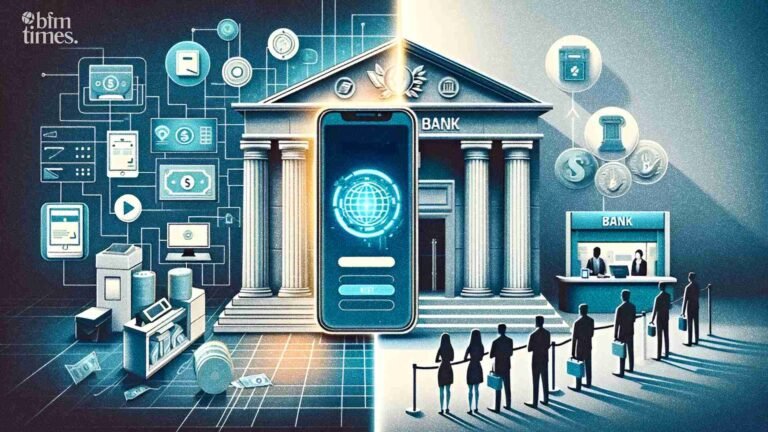
The banks have traditionally depended on the strict credit scoring models, such as FICO or CIBIL. These systems concentrated on small amounts of data from the past, usually leaving out millions of potential borrowers. The use of AI in lending today incorporates superior machine learning algorithms, which simultaneously work with thousands of variables, allowing a quicker and more accurate decision to be made.
The industry standards demonstrate that AI-based credit lending systems demonstrate a higher accuracy of credit risk prediction by approximately 25 percent, and they also lead to a cost reduction in processing. This is not solely a technological development, but it is transforming the way financial institutions measure trust, risk, and opportunity.
Traditional vs. AI Evolution of Credit Scoring.
Time-honored Credit Scoring Systems.
The traditional systems rely on a linear model and a limited dataset:
- Credit history
- Repayment track record
- Credit utilization ratio
The major limitations of these systems are:
- Reliance on the “thick” credit files.
- The inability to evaluate a new-to-credit user.
- Delays in decision-making.
AI Credit Scoring Systems
The new AI credit scoring systems are based on non-linear algorithms to reveal latent trends on various datasets. This will allow AI in loan issuance to screen borrowers outside the conventional criteria. As covered in detail in AI vs Traditional Banking, this shift is reshaping every part of how financial institutions operate.
AI finds such correlations as the following:
- Consistency of spending versus repayment probability.
- Volatility of income vs. default risk.
- Discipline in behavioral terms compared to discipline in terms of money.
Traditional and AI-Based Credit Scoring.
| Parameter | Traditional Models | AI-Based Models (AI in Loan Approval) |
| Speed | Days to weeks | Seconds |
| Data Variety | Limited (structured) | Extensive (structured + unstructured) |
| Accuracy | Moderate | High (dynamic learning models) |
| Transparency | High | Moderate (improving with XAI tools) |
This demonstrates that machine learning loan approval systems are more competitive than legacy systems in terms of speed and predictive ability.
The Process of AI in the Loan Approval Data Pipeline.
The entire strength of AI in loan approval depends on a well-structured data pipeline that turns raw inputs into clear lending decisions.
Data Ingestion
The information in the AI systems is obtained through various sources:
- Credit bureaus
- Bank operations (through open banking systems)
- Utility and telephone payments.
- Electronic transaction records.
Such a multi-source strategy allows AI lending systems to create a complete depiction of a borrower.
Feature Engineering
After data is gathered, machine learning models are used to extract meaningful features, including.
- Repayment consistency
- Monthly cash flow stability
- Expense-to-income ratios
Compared to the conventional systems, AI in loan approval does not use rigid indicators but rather trends.
Model Inference
The last phase will be real-time decision-making.
- Risk score generation
- The calculation of default probability.
- Output: Approve / Reject / Refer
The automated pipeline enables banks to expand by being able to maintain accuracy.
Modern Lending with Core Machine Learning Algorithms.
The core algorithms powering AI in loan approval today range from simple decision trees to complex deep learning models & each plays a unique role. Understanding ML in Predictive Analytics helps explain why these models outperform traditional scoring methods so consistently.
Decision Trees and Logistic Regression.
The following are fundamental models of AI credit scoring because they are interpretable:
- Be able to give good arguments for why decisions are made.
- Favored as a regulatory compliance measure.
- Provide a transparent feeling in automated loan issuance AI systems.
Random Forests and Gradient Boosting (XGBoost).
The following ensemble methods improve the accuracy of prediction:
- Integrate several models to minimize errors.
- Work with large and complicated data.
- Fintech credit scoring AI applications.
Neural Networks
Deep learning models are finding more applications in AI in loan approval to
- Fraud detection
- Pattern recognition
- Behavioral analytics
Although very precise, such models need to be explained with the help of other tools that guarantee transparency.
The Alternative Data Role: Credit Bureau Bypassed.
The biggest shift AI brings to loan approval is its ability to go beyond credit bureaus & tap into a much wider range of alternative data sources.
Cash Flow Analysis
Via account aggregators and through open banking:
- Bank transactions are analyzed in real time.
- Income trends are determined dynamically.
Digital Footprints
AI models consider:
- Mobile usage behavior
- Online payment habits
- Services and subscription fees.
Utility and Rent Data
Regular payments such as:
- Electricity bills
- Rent
- Internet services
These act as a pointer to financial discipline in AI lending systems.
Psychometric Data
There are sophisticated systems that measure behavioral characteristics:
- Risk tolerance
- Spending discipline
- Behavior of financial planning.
This allows the AI in loan approval to appraise borrowers whose credit history is low or nonexistent.
Bank Advantages: Accuracy, Efficiency, and Inclusion.
The benefits of AI in loan approval go well beyond speed & touch on accuracy, cost savings & greater financial inclusion for underserved borrowers.
Lower Default Rates
The AI in loan-approving assists the banks by enhancing risk segmentation:
- There are high-risk borrowers.
- Dispose of non-performing assets.
Operational Efficiency
Automation significantly reduces the following:
- Processing time
- Manual underwriting costs
- Human error rates
Financial Inclusion
The most effective advantage is, perhaps, increased access to credit.
- Gig economy workers
- Freelancers
- First-time borrowers
AI in loan giving will facilitate the financial institutions’ access to underserved people without posing extra risk to them.
The “Black Box” Problem: Explainability and XAI
The lack of transparency in complex AI models remains one of the hardest challenges to solve in loan approval systems today. Although these systems provide high accuracy, they tend to be black boxes, and it is hard to determine how decisions are reached by the banks, regulators, and customers.
The Challenge
Machine learning in loan approvals through deep learning and complex ensemble models is able to process thousands of variables at a time. The rationale of a loan rejection or a loan approval is not always easily understandable, however.
This creates several risks:
- Mistrust among borrowers.
- The issues of regulatory compliance.
- Auditing of automated decisions is problematic.
In the case of financial institutions, the problem of this kind of opacity is not merely a technical one, but it has a direct effect on accountability within AI lending systems.
The Solution: Explainable AI (XAI).
In response to this, banks are moving towards the use of Explainable AI (XAI) frameworks in AI in loan approval systems.
Key tools include:
- SHAP (Shapley Additive Explanations): Permits the contribution of each feature to a decision to be broken down.
- LIME (Local Interpretable Model-Agnostic Explanations): Interprets the specific prediction simplistically.
The following are the resultant tools that produce reason codes:
- High credit utilization
- Irregular income patterns
- Inadequate repayment record.
With the inclusion of XAI, automated systems of loan approval AI will become more transparent, thus allowing lenders to explain their decisions without affecting the performance of the models.
EU AI Act and Fair Lending in 2026: Regulatory Environment.
Global regulators are tightening their frameworks around AI in loan approval to ensure fairness & accountability across all lending decisions. Due to the centralization of AI in the loan approval process in banks, international regulators are coming up with more stringent frameworks to provide fairness, transparency, and accountability.
EU AI Act: Classification of High-Risk.
The AI credit scoring systems will fall under the high-risk applications of the EU AI Act. This means banks must:
- Maintain complete model transparency.
- Keep a record of how decisions are made.
- Introduce the risk management and monitoring systems.
The classification has a great influence on the way AI lending systems are created and introduced to the world.
Fair Lending Laws and ECOA
The United States has the Equal Credit Opportunity Act (ECOA), which requires fairness in lending decisions. In the case of AI in loan approval, this will be translated to:
- Obligatory adverse action notice on turned-down applications.
- Explanations of credit decisions are clear.
- The non-discriminatory model results in
These necessities make sure that even the most automated systems are answerable to the consumers.
HITL Systems – Human in the Loop Systems.
Although it will be automated in 2026, the regulations point to the significance of human control.
In practice:
- Loan decisions that are of high value have to be checked manually.
- The controversial cases should entail human intervention.
- The results of AI are suggestions and not commands.
Such a combination strategy will make AI in loan issuance effective and accountable.
Ethical Concerns: Reducing Algorithmic Bias.
Bias in AI models is one of the most serious ethical issues tied to loan approval systems & it demands constant attention from banks & regulators alike. The same risks are explored further in Risks of AI in Finance, which covers how bias & ethical gaps can undermine trust in financial AI systems.
Machine Learning Model Data Bias.
Artificial intelligence models are trained on past data. In case there is bias in past lending decisions, the system can recreate or even exaggerate the bias.
Examples include:
- Socioeconomic bias
- Geographic discrimination
- Incongruity based on gender or age.
That is why bias reduction becomes a high priority in the AI systems of fintech credit scoring.
Fairness Audits and Model Representations.
To avoid any kind of injustice, the banks have to carry out frequent audits on AI in the communication systems of loan approval.
- Discrimination between groups of individuals.
- Model stress testing in dissimilar economic conditions.
- Ongoing model drift checking.
Responsible AI Practices
The major financial institutions are embracing the following:
- Various and representative data sets.
- Artificial data to minimize bias.
- Open governance institutions.
Ethical AI is no longer a luxury but a necessity in keeping people comfortable with the automated loan approval AI systems. The same concern also applies to fraud detection in banking, where biased models can block genuine transactions & harm innocent customers.
Conclusion: Autonomous Underwriting: The Future.
The next chapter of AI in loan approval points toward fully autonomous underwriting where credit decisions adapt in real time to each borrower’s financial life. A manual and time-consuming process has been transformed into a real-time and data-driven system that is able to make very accurate lending decisions.
AI is not a support tool anymore; it is the backbone of contemporary credit systems. Not only are banks that use machine learning becoming more efficient, but they are also increasing access to financial services.
In the future, AI in loan approval will be in constant credit monitoring. The lenders will no longer be dependent on the credit scores of borrowers, which will be dynamic based on real-time financial information.
This shift will enable:
- Tailor-made lending products.
- Adaptive credit limits
- Proactive risk management
Due to the development of regulatory frameworks and the reinforcement of ethical standards, AI in loan approval will remain that which defines the defining factor of trust and creditworthiness in the digital economy.
Frequently Asked Questions (FAQ)
Does the AI in loan approval complicate loan acquisition?
No, AI in loan approval can usually facilitate loan issuance, particularly to borrowers who have a poor credit history.
Will an AI-generated loan rejection be appealable?
Indeed, borrowers can seek clarifications and appeal loan issuance decisions made by AI in loan approval application software.
What are some of the things that AI looks at in addition to my credit score?
AI in loan approval applications examines the bank transactions, utility payments, income trends, and online monetary activity.
Disclaimer: BFM Times acts as a source of information for knowledge purposes and does not claim to be a financial advisor. Kindly consult your financial advisor before investing.