


The banking sector is facing a growing wave of fraud that puts user money & personal data at serious risk. It is getting harder for many of the banks to keep up with new tricks. This is where AI fraud detection in banking steps in as a powerful shield. It helps the banks spot suspicious activity in real time. These systems protect millions of customers from all of the financial loss. In this article, readers will gain insights into how AI detects fraud in banking systems featured on BFM Times.
- What Is the Growing Threat of Banking Fraud?
- Why Traditional Fraud Detection Is Not Enough
- What Is AI Fraud Detection in Banking?
- How Does AI Actually Detect Fraud Step by Step?
- Collecting & Analyzing Transaction Data
- Behavioral Analytics & Pattern Recognition
- What Is the Real World Impact of AI Fraud Detection?
- What Are the Benefits of AI Fraud Detection for Customers?
- What Does the Future of AI Fraud Detection in Banking Look Like?
- Conclusion
What Is the Growing Threat of Banking Fraud?
The threat of fraud in banking has gone far beyond simple stolen cards & now includes deepfakes & fake identities & AI-powered phishing attacks. It has grown into a massive global problem. Consumer fraud losses have surged to $12.5 billion in 2024 alone. It was a 25% increase from the previous year. Deloitte predicts that the fraud losses in the US could reach $40 billion by 2027. The threat is real & it is growing at a very fast pace. They cannot fight this battle with old methods anymore.
Why Traditional Fraud Detection Is Not Enough
The old banking systems used fixed rules to catch fraud & these methods are no longer strong enough to handle modern threats. The example is a rule that says to block any transaction over $10,000. It might sound simple but criminals are smart. They break the large transactions into smaller ones to avoid any of the detection. These rule-based systems are slow to update. They miss new types of fraud & also block too many genuine transactions. It frustrates the honest customers who are just trying to use their accounts normally. The banks needed something smarter & they also needed AI for their customers. Just as explored in AI vs Traditional Banking: What’s Changing in FinTech?, this shift has become unavoidable across the industry.
What Is AI Fraud Detection in Banking?
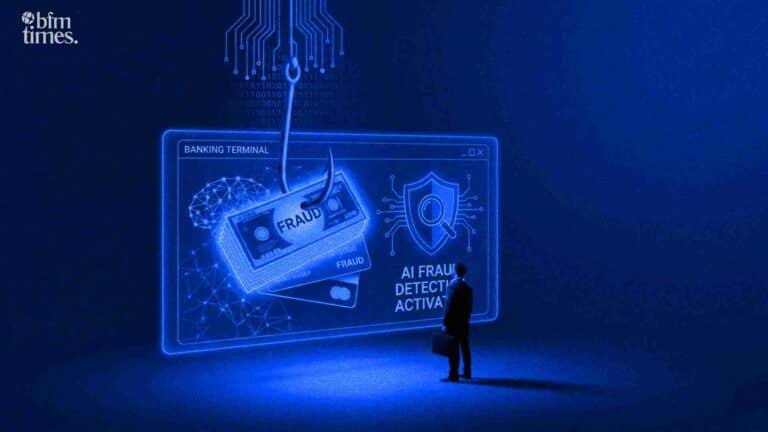
These AI fraud detection systems in banking bring together machine learning & advanced data analysis to find & stop suspicious activity before it causes harm. These systems can now analyze millions of transactions per second. They learn from the past data to spot patterns. It raises an alert when something unusual happens. The goal is to catch the fraud before it causes damage. They work across all types of accounts & different transactions at the same time. The banks use different types of AI models for this purpose. These decision tree models help them classify transactions quickly. The neural networks detect complex fraud patterns. It also uses natural language processing to scan emails & messages for scam language. They work together to create a strong defense for every customer.
How Does AI Actually Detect Fraud Step by Step?
The process of AI fraud detection in banking is quite logical when broken down into clear steps. It is actually quite logical when broken down. These steps show exactly how the system protects your money.
Collecting & Analyzing Transaction Data
The AI system collects data from every card swipe & transfer in real time to build a full picture of activity. They look at factors like transaction amount & location & device used & time of day. It spots an issue immediately if you usually shop in Delhi & suddenly a transaction appears from another country. The system does not wait for a human to notice it. They act within moments of any suspicious signal. The Best AI Tools for Data Analysis in 2026 highlights just how powerful these real time data tools have become.
Behavioral Analytics & Pattern Recognition
The AI builds a detailed profile of normal banking behavior for each user to detect anything that looks out of place. It tracks how you usually spend & when you log in & what devices you use. These profiles help the system detect anything that looks out of place. It raises a flag if your account shows unusual behavior. The example is logging in from a new device at 3 AM & transferring a large amount. It recognizes this shift & acts instantly.
Real Time Anomaly Detection
The speed of AI fraud detection in banking is one of its greatest strengths & it acts within milliseconds to block suspicious activity. It does not take hours to act. The system can block a suspicious transaction within milliseconds. They now use systems called decision engines that process alerts in under one millisecond. This speed is impossible for human analysts to match. It saves money & protects customers instantly. These systems never sleep or take a break.
Machine Learning That Continuously Improves
The biggest advantage of AI is that it learns over time & gets smarter with every fraud attempt it encounters. Every fraud attempt teaches the system something new. It gets smarter the more data it processes. These self-optimizing AI systems automatically retrain themselves as new threats come up. The banks do not need to manually update rules all the time. They adapt on their own without any delays.
What Is the Real World Impact of AI Fraud Detection?
The results of AI fraud detection in banking are impressive & the numbers speak for themselves. It prevented an estimated $25.5 billion in fraud losses globally in 2025. The machine learning systems helped prevent $4 billion in fraud for participating institutions in 2024 alone. It also helped the US Treasury Office of Payment Integrity recover over $375 million in potentially fraudulent payments in 2023. These numbers show just how big the impact really is. The 87% of global financial institutions have now deployed AI-driven fraud detection systems. It is clear that the banking world is taking this technology very seriously. They believe AI will completely change how fraud is detected in the near future. These figures are backed by surveys of 93% of banking professionals worldwide.
What Are the Benefits of AI Fraud Detection for Customers?
The benefits of AI fraud detection in banking reach far beyond the banks themselves & directly improve the experience of everyday customers. These advantages extend directly to everyday customers as well. The list below covers the key ways customers gain from AI protection. They get faster fraud resolution & their money back sooner. The AI reduces false positives so genuine transactions are rarely blocked by mistake. It sends customers real-time alerts if something suspicious happens. These systems offer 24/7 protection without human agents working overnight. The overall banking experience becomes safer & smoother for everyone. This connects well with how Robo-Advisors Explained: How AI Manages Your Investments shows AI building a more automated & secure financial experience overall.
Reducing False Positives With AI
The common problem with old fraud systems was blocking real transactions & this caused unnecessary frustration for honest customers. It is frustrating when your card gets declined at a grocery store because the system flagged it as fraud. These events are called false positives. The AI reduces this issue by understanding your spending habits deeply. It knows the difference between a genuine purchase & a suspicious one. These improvements save both the bank & the customer from unnecessary stress.
What Are the Challenges Banks Face With AI Fraud Detection?
The path to full AI fraud detection in banking comes with real challenges that the industry must address as the technology keeps growing on a daily basis. These obstacles are important to understand as the technology keeps growing on a daily basis.
Staying Ahead of AI-Powered Criminals
They are also using AI to commit fraud & this makes the battle between banks & criminals more intense than ever before. It is estimated that over 50% of fraud today involves the use of artificial intelligence. These criminals use AI to create more convincing phishing messages & more real fake identities. The banks must keep upgrading their systems to stay ahead. It is an ongoing battle between AI defenders & AI attackers.
Ethical & Transparency Concerns
The Risks of AI in Finance: Security, Bias & Ethical Concerns makes it clear that banks must ensure their AI systems are fair & accountable to regulators & customers alike. It can harm innocent customers if an AI system makes any wrong decisions. These regulatory bodies are now asking banks to explain how their AI models work. The concern is especially strong in regions like Europe where banking regulators are closely watching the AI usage.
Data Privacy & Security
These AI systems need large amounts of customer data to work well & this raises important questions about how that data is handled. It raises questions about data privacy & how that data is stored. The banks must follow strict data protection laws. They need to use customer data in a responsible way while still keeping security tight.
What Does the Future of AI Fraud Detection in Banking Look Like?
The future of AI fraud detection in banking is quite exciting & new technologies are already emerging to make fraud detection far more accurate & proactive. These new technologies are coming up that will make the fraud detection even more accurate & much more proactive. The agentic AI is one such development. It does not just raise alerts but it also takes action. These systems can automatically freeze an account & then notify the customer & then start an investigation without waiting for any of the human input. It moves banks from more passive detection to active defense. The banks are also exploring federated learning where multiple banks share the fraud knowledge without sharing any of the sensitive customer data. It helps the whole industry fight fraud together as one united force. The global AI fraud detection market is projected to grow from $14.7 billion in 2025 to over $80 billion by 2035. It shows how seriously the banking world is taking this technology. They expect AI to reduce global fraud losses by up to 30% by 2030. These projections show just how transformative the next decade will be for banking security. This also ties into the AI in Loan Approval: How Banks Use Machine Learning for Credit Scoring where AI is reshaping every corner of financial services.
Conclusion
The rise of banking fraud is a serious challenge & AI fraud detection in banking is proving to be the most powerful answer to it. It is clear that AI fraud detection in banking is proving to be a powerful solution. These systems work around the clock & learn from every threat & then act faster than any of the human team. It covers everything from spotting suspicious transactions to fighting with deepfakes. The technology is transforming the way banks protect their customers every single day. They continue to evolve & so does their ability to keep your money safe with them. The future of banking security is intelligent & also real time & AI driven. It is great news for everyone who uses a bank in the modern world.
Disclaimer: BFM Times acts as a source of information for knowledge purposes & does not claim to be a financial advisor. Kindly consult your financial advisor before investing.